Board and train vs private lessons: which is right for your dog?
Two proven formats with different trade-offs. Here is how to tell which one fits your dog and your life.

Part of Dog training in Oakville: the complete guide
Key takeaways
- Private lessons teach you to train your dog; board and train has a professional build the foundation first, then teaches you.
- Both require owner follow-through. Board and train is not a way to skip involvement.
- A consultation is the most reliable way to choose.
What is the difference between board and train and private lessons?
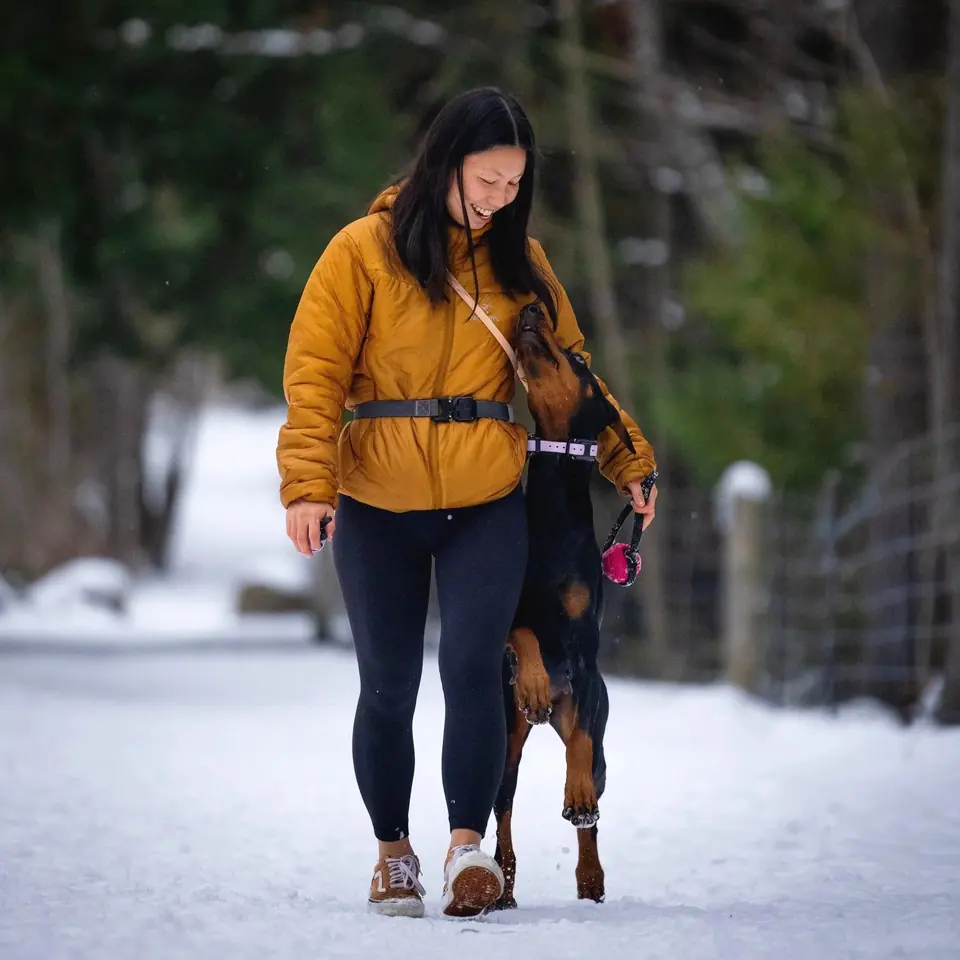
In private lessons, the owner does the training with a trainer coaching each session. In board and train, the dog stays with the trainer for structured daily training, then the owner learns the system in transfer sessions. Private lessons build owner skill from day one; board and train builds the dog's foundation faster.
| Private lessons | Board and train | |
|---|---|---|
| Who handles the dog | You | Trainer first, then you |
| Pace | Weekly sessions plus your practice | Daily structured training |
| Owner time | Practice between every session | Transfer sessions and follow-through at home |
| Location | Home, walks, real-world spots | Trainer's care plus planned outings |
| Best for | Hands-on owners, specific issues | A reset in structure, more ingrained behaviour |
| Lakeshore Canine pricing | $150 single, $800 for 6, $1,200 for 10 | Quoted after consultation |
Is board and train worth it?
Board and train is worth it when a dog needs consistent daily structure that the household can't provide right now, or when behaviours are ingrained enough that a professional foundation speeds everything up. It is not worth it for owners who want results without learning to maintain them.
A dog can behave beautifully for a trainer and still slip at home if the rules change. That's why our programs end with owner transfer sessions, and why we're direct that Board and Train is not for owners looking for instant results without ongoing involvement.
Which is better for reactivity?
Mild to moderate leash reactivity is often handled well with private lessons, because the owner's handling is part of the problem and the solution. More intense reactivity, or households where walks are currently unmanageable, can benefit from a board and train foundation followed by close transfer work.
Read more in our guide to dog reactivity.
How do I decide?
Book a consultation. The trainer assesses your dog's behaviour, your goals, and your schedule, then recommends one option based on fit — not the more expensive one.
Ask yourself three questions before the call:
- How many minutes a day can we realistically practise?
- Is the problem mostly the dog's habits, or mostly how we handle the dog?
- Are walks, guests, or other daily routines currently unsafe or unmanageable?
More questions
Do dogs forget their owners during board and train?
No. Dogs reunite with their owners normally. What matters is that the owner learns the same rules and handling so the training carries over.
Can I visit my dog during board and train?
Policies vary by trainer. Ask during your consultation how updates, visits, and transfer sessions work.
About the author
Blair Lowe — Owner and Head Trainer, Lakeshore Canine
Blair has trained dogs professionally for over six years, in Ottawa, the United States, and now Oakville, working with family pets and high-drive working dogs. He is a PSA Certified Decoy and earned a PSA 1 Vice National Champion title with his Belgian Malinois, Zira, at PSA Nationals in 2022.
Want a plan for your dog?
Every program starts with a consultation. We serve Oakville, Burlington, Milton, Mississauga, and surrounding areas.