How do dogs say "I love you"?
What affection looks like from a dog's side, and how to answer it in their language.

Part of Puppy training: the first six months
Key takeaways
- Dogs show affection through closeness, leaning, soft eye contact, and relaxed body language.
- Mutual gazing between dogs and owners is linked to oxytocin, the bonding hormone.
- Calm, predictable interaction and structured play say "I love you" in dog terms.
How do you say "I love you" in dogs?
Dogs express affection through physical closeness, soft sustained eye contact, and leaning against their people. You can say it back with calm, predictable interaction, gentle touch the dog enjoys, and structured play — clarity and consistency make dogs feel safe, which is the foundation of the bond.
What are the signs a dog loves you?
Common signs include leaning or resting against you, following you from room to room, soft eyes and a relaxed face, a loose wagging body, bringing you toys, and checking in with you on walks.
| Behaviour | What it usually means |
|---|---|
| Leaning against you | Seeking contact and security |
| Soft, relaxed eye contact | Trust and social bonding |
| Following you around | Attachment and interest in what you're doing |
| Bringing toys | Invitation to play together |
| Checking in on walks | Engagement and a working relationship |
| Sleeping near you | Feeling safe |
A hard, fixed stare is different from soft eye contact. Context and the rest of the body tell you which you're seeing.
Is there science behind dogs' affection?
Yes. Research published in the journal Science in 2015 found that mutual gazing between dogs and their owners raised oxytocin — a hormone linked to social bonding — in both. The bond is a two-way biological relationship, not just learned behaviour.
How do I show my dog I love them?
Be predictable, clear, and fair. Dogs feel most secure when rules are consistent and interactions are calm. Add play, training games, and touch your dog actually enjoys — many dogs prefer a chest scratch to a hug.
Trainer's note: Owners sometimes worry that structure and rules make a dog love them less. In our experience it's the opposite: dogs relax when they understand what is expected, and a relaxed dog has more room to engage. See our training philosophy.
More questions
Do dogs like being hugged?
Many dogs tolerate hugs rather than enjoy them. Watch for turned heads, lip-licking, or stiffening, and offer contact your dog chooses instead.
Why does my dog lean on me?
Leaning is usually a bid for closeness and security. If it happens mostly in stressful situations, your dog may be seeking reassurance.
About the author
Blair Lowe — Owner and Head Trainer, Lakeshore Canine
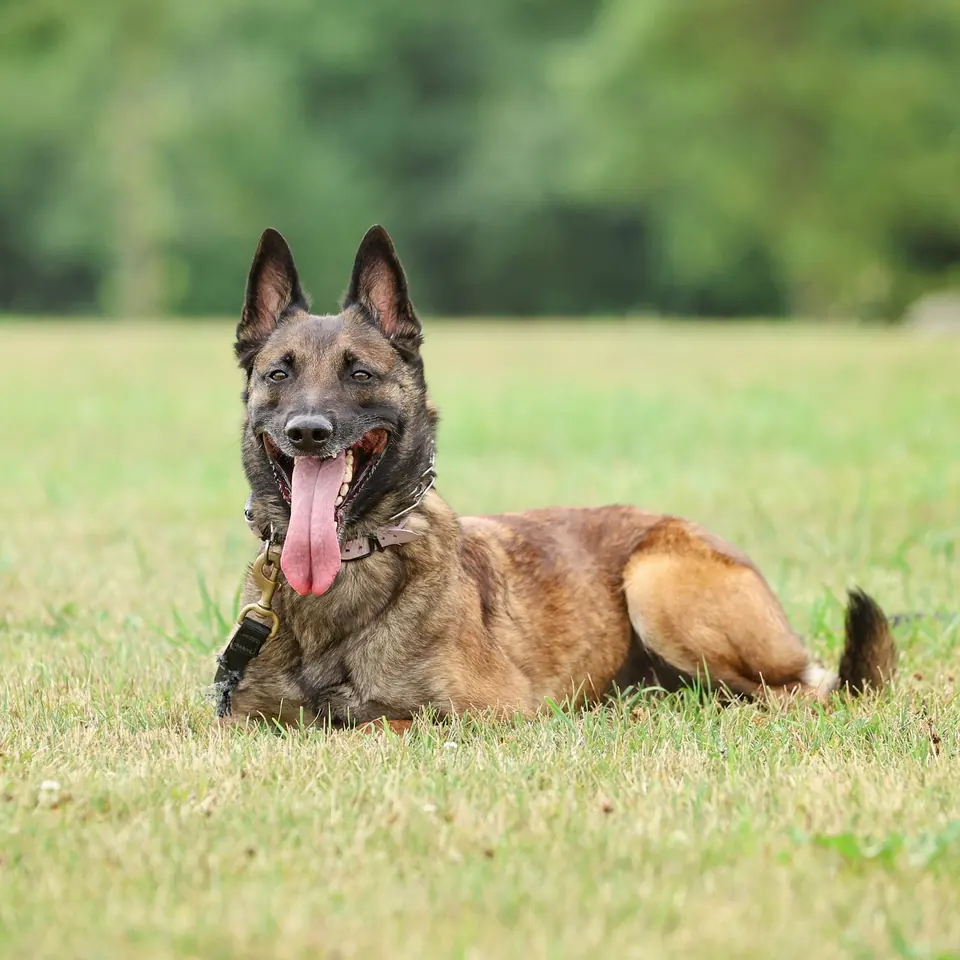
Blair has trained dogs professionally for over six years, in Ottawa, the United States, and now Oakville, working with family pets and high-drive working dogs. He is a PSA Certified Decoy and earned a PSA 1 Vice National Champion title with his Belgian Malinois, Zira, at PSA Nationals in 2022.
Want a plan for your dog?
Every program starts with a consultation. We serve Oakville, Burlington, Milton, Mississauga, and surrounding areas.