How to stop your dog pulling on the leash
Pulling is a habit that pays off for the dog. Here is how to make a loose leash pay better.

Part of Dog training in Oakville: the complete guide
Key takeaways
- Dogs pull because pulling works: it gets them where they want to go.
- Stop letting pulling pay, and reward the dog generously for being beside you.
- Practise in boring places first; every walk where pulling works undoes practice.
Why does my dog pull on the leash?
Dogs pull because it works: every time pulling gets them to the smell, the dog, or the park faster, the habit is reinforced. Dogs also naturally walk faster than people, and pressure on a collar can trigger an instinct to lean into it.
How do I stop my dog pulling on the leash?
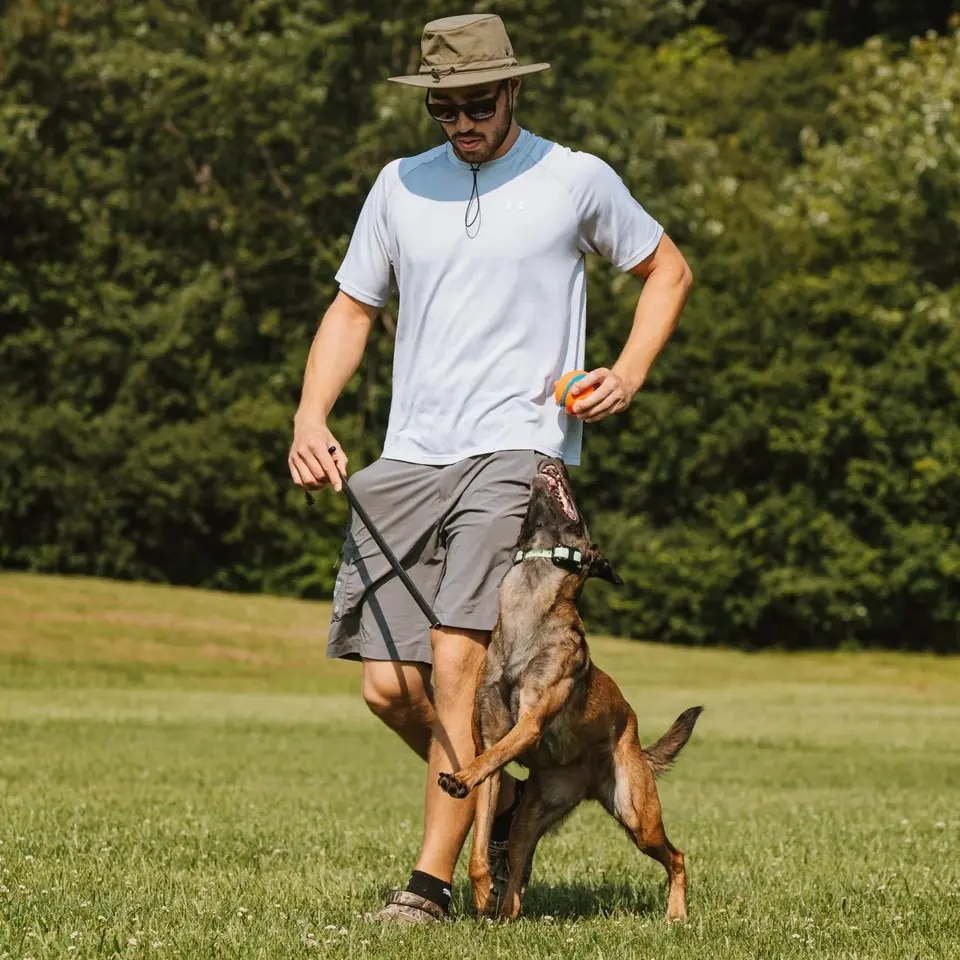
Make pulling stop working and make walking beside you worth it. When the leash goes tight, stop or change direction; when the dog is in position with a loose leash, mark and reward often. Start in low-distraction places and raise difficulty gradually.
- Define the position. Pick a side and a spot — for example, the dog's shoulder by your leg.
- Reward the position heavily at first. Every few steps in a quiet hallway or driveway.
- Pulling stops progress. Tight leash means you stop, or turn and walk the other way.
- Release on your terms. Use a word like "break" to let the dog sniff — sniffing becomes a reward, not something taken.
- Raise difficulty slowly. Driveway, quiet street, busier street, then trails and downtown sidewalks.
- Manage the rest. While training, keep other walks short or controlled so pulling isn't rehearsed.
Should I use a harness or a collar to stop pulling?
Equipment can reduce pulling, but it doesn't teach the dog how to walk. The right tool depends on the dog, their size, and the problem; a trainer should fit it and explain how to use it before you rely on it.
At Lakeshore Canine, tools are selected for the individual dog and always explained to the owner. The goal is clear communication, not reliance on equipment.
What mistakes make leash pulling worse?
Letting the dog pull "just this once," walking too long before the dog can handle it, and constant nagging on the leash all make pulling worse. Inconsistency teaches the dog that pulling sometimes works, which makes it stronger.
Trainer's note: Leash pulling and leash reactivity are often linked. A dog that is always at the end of the leash is already tense and over-aroused before it ever sees a trigger. Calm, loose-leash walking is part of most reactivity plans we build.
More questions
How long does it take to teach loose-leash walking?
Most dogs show clear improvement within two to six weeks of consistent daily practice. Reliability around heavy distraction takes longer.
Is it bad to let my dog sniff on walks?
No. Sniffing is valuable. Put it on a cue so your dog earns sniff breaks instead of dragging you to them.
About the author
Blair Lowe — Owner and Head Trainer, Lakeshore Canine
Blair has trained dogs professionally for over six years, in Ottawa, the United States, and now Oakville, working with family pets and high-drive working dogs. He is a PSA Certified Decoy and earned a PSA 1 Vice National Champion title with his Belgian Malinois, Zira, at PSA Nationals in 2022.
Want a plan for your dog?
Every program starts with a consultation. We serve Oakville, Burlington, Milton, Mississauga, and surrounding areas.